Gangtok:17th Oct: Two important issues concerning Sikkim’s water security and safety from climate-related disasters are set to receive attention at the national level, with the Parliamentary Standing Committee on Water Resources including them in its agenda for examination and reporting during 2026–27.
Indra Hang Subba, the lone Lok Sabha MP from Sikkim, on Saturday welcomed the inclusion of the revival and protection of natural springs and traditional water systems, as well as measures to reduce the risk of Glacial Lake Outburst Floods (GLOFs), among the subjects to be examined by the Committee.
Both issues are particularly important for Sikkim, where natural springs remain a vital source of drinking water for mountain communities, while the expansion of glacial lakes poses a serious threat to downstream settlements and infrastructure, he said.
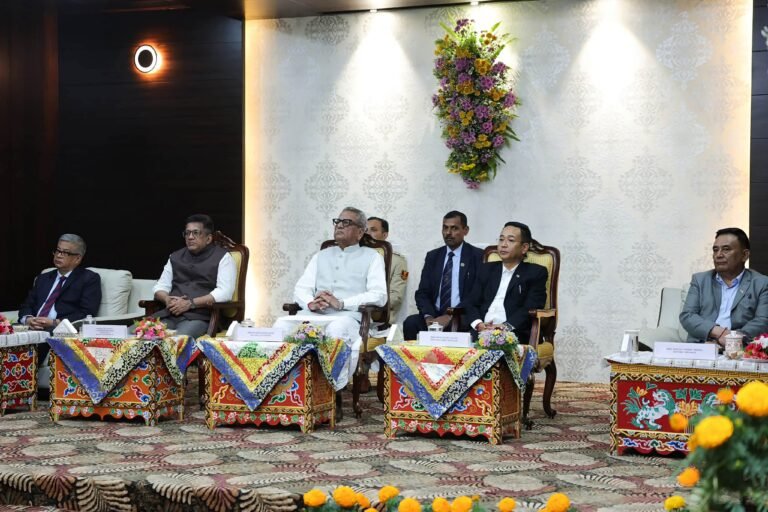
Indra Hang Subba is a member of the Parliamentary Standing Committee on Water Resources and has been attending its first meeting in New Delhi.
The first subject, listed at Serial No. 12 of the Committee’s agenda, concerns water security through the revival, protection and sustainable management of natural springs, aquifers and traditional water systems, with particular emphasis on drinking water management.
Aquifers are underground layers of rock or soil that store water. In Sikkim, many communities depend on natural springs for their daily water needs. These springs also hold deep cultural and religious significance, with many regarded as sacred places associated with local deities and protected by communities.
The drying up of springs can therefore affect not only drinking water supplies but also the traditional practices and livelihoods of mountain communities. The Committee’s examination provides an opportunity to bring Sikkim’s concerns to the national level and explore ways to protect these vital water sources.
The second agenda is related with the impact of climate change on the expansion of glacial lakes in the Indian Himalayan region and the growing risk of GLOFs. It also covers steps to introduce early warning systems and protect downstream settlements and water infrastructure.
GLOF is a major concern for Sikkim, which accounts for a significant share of the country’s high-risk glacial lakes. National Disaster Management Authority (NDMA) has identified 189 high-vulnerability glacial lakes in the Indian Himalayas, including 40 high-hazard glacial lakes in Sikkim. This means one out of every four high-risk glacial lakes identified in India is located in Sikkim.
Of these 40 glacial lakes in the State, 16 have been categorised under the highest-risk classification.
Official reports have highlighted the State’s vulnerability to glacial lake-related disasters, underlining the need for effective early warning systems and measures to protect downstream communities and critical infrastructure.
Subba expressed his gratitude to the Chairman of the Parliamentary Standing Committee on Water Resources, Rajiv Pratap Rudy, for including the two subjects in the Committee’s examination agenda, recognising their importance for Himalayan water security and climate resilience.
“The inclusion of both subjects provides an opportunity to address the interconnected challenges of spring water security, climate change, glacial lake expansion and disaster risk in the Himalayan region. The examination can help strengthen policy approaches through scientific assessment, protection of recharge zones, early warning systems, long-term monitoring and community participation,” the Lok Sabha MP said.
The two subjects bring together the challenges of securing drinking water and reducing disaster risks in the Himalayan region. Their examination at the parliamentary level could help draw greater national attention to the specific needs of Sikkim and other vulnerable mountain communities, while encouraging stronger policies for sustainable water management and disaster preparedness, observed MP Indra Hang Subba,’ according to the communique, issued by Office of the MP, Lok Sabha.
About the Author