Gangtok:25th May: National Disaster Management Authority (NDMA) organized the Inception Workshop on the National GLOF Risk Mitigation Programme (NGRMP) at IIPA Bhawan, New Delhi on 22nd May 2026 bringing together policymakers, technical experts, and representatives from Himalayan States to deliberate on strengthening Glacial Lake Outburst Flood (GLOF) risk reduction measures across the Indian Himalayan Region,as per the communique received today.
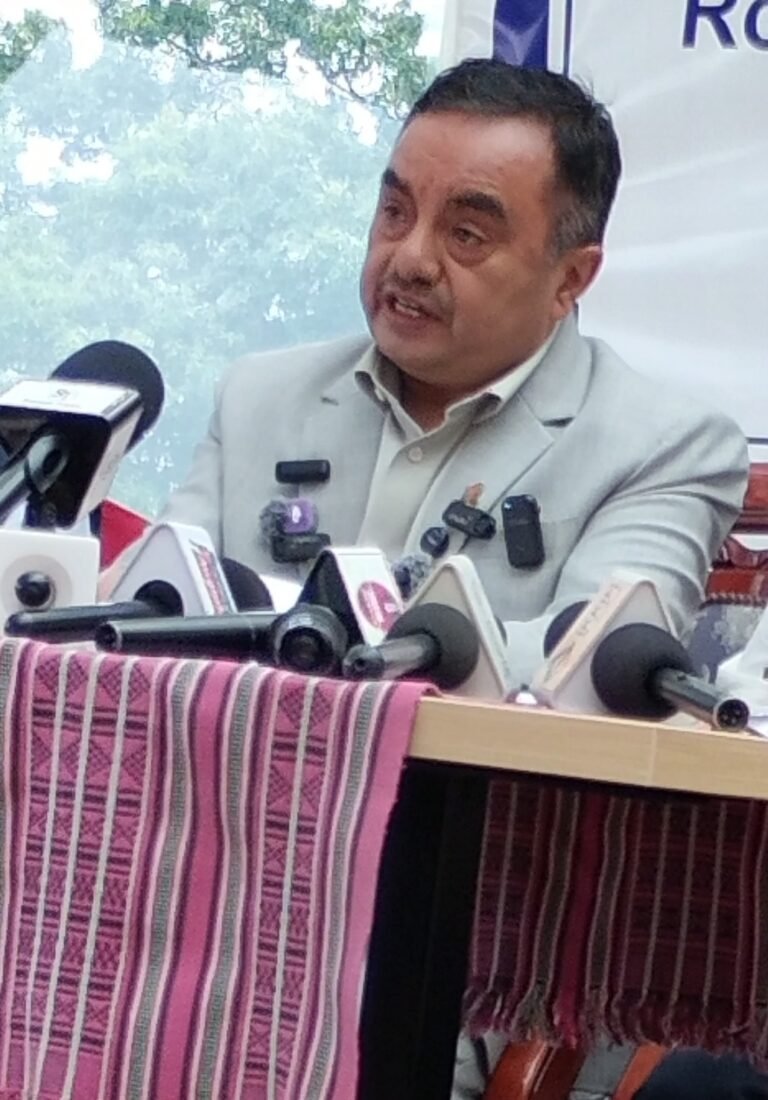
During the workshop, the Department of Science and Technology played a key role in Technical Session 3 on “Site-Specific Mitigation: DPR Preparation, Structural and Non-Structural Options, and Prioritization.” D.G. Shrestha, Principal Director-cum-Secretary, Department of Science and Technology, Government of Sikkim, delivered a detailed presentation on “Site-Specific Mitigation Planning for GLOF in Sikkim”, highlighting the State’s scientific and engineering approaches toward glacial lake risk mitigation.
The presentation outlined that Sikkim currently has 16 High-Risk Category-A glacial lakes identified under NDMA assessments, including North Lhonak Lake, South Lhonak Lake, Shako Chho, and the Gurudongmar Lake Complex. The State has undertaken extensive hazard assessments, bathymetric studies, hydrodynamic modelling, and field investigations across six critical watersheds hosting high-risk glacial lakes.
A major focus of the presentation was the proposed mitigation strategy for Shako Chho, identified as one of the most vulnerable high-risk glacial lakes due to its proximity to downstream settlements such as Thangu village. The Department presented innovative mitigation concepts, including solar-powered pumping systems for controlled lake lowering and the use of bathymetric data to design safe and effective interventions.
The presentation also highlighted lessons learned from the 2023 South Lhonak GLOF event through hydrodynamic modelling, flood mapping, and assessment of peak discharge and flow velocity along the Lhonak Valley. These scientific analyses have contributed to the conceptualization of “GLOF Shield” retention structures aimed at reducing downstream flood impacts and safeguarding critical mountain infrastructure.
Another important component of the presentation focused on the Gurudongmar Lake Complex, comprising three interconnected high-risk lakes categorized by NDMA as Category-A lakes. The Department proposed an innovative concept integrating disaster resilience with cultural and spiritual heritage preservation through structural mitigation measures such as moraine plug safety walls, regulated spillways, and landscape-sensitive infrastructure around the sacred Gurudongmar Lake.
The workshop provided a national platform for sharing Sikkim’s experiences, scientific findings, and engineering innovations in GLOF mitigation. The deliberations emphasized the importance of coordinated institutional efforts, scientific collaboration, early warning systems, and site-specific mitigation planning to strengthen resilience against climate-induced glacial hazards in the Himalayan region.
The Department of Science and Technology, Government of Sikkim, reaffirmed its commitment to advancing evidence-based disaster risk reduction measures and collaborative approaches for protecting lives, livelihoods, critical infrastructure, and fragile mountain ecosystems from the growing threat of GLOFs.
About the Author