“
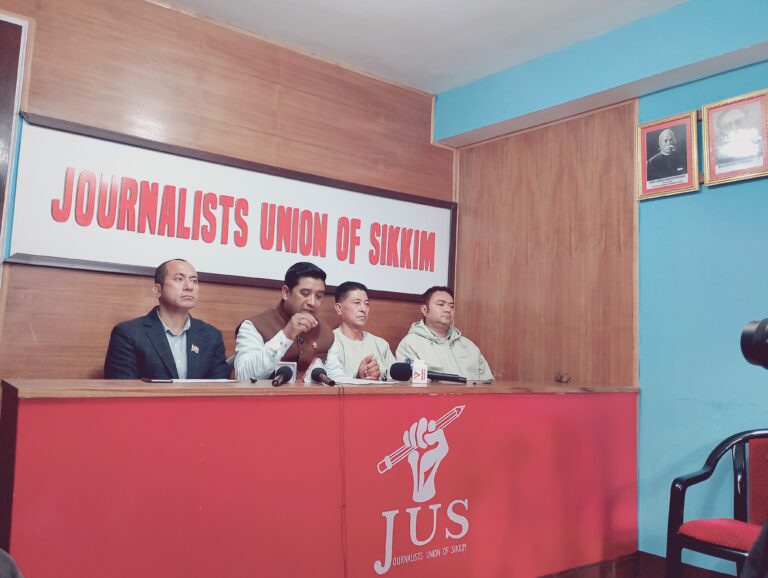
Gangtok:3rd April:Some of the Citizen Action Party members havet objected to closing of certain schools for the good by Govt of Sikkim.Reacting to it SKM has presented the ‘grpund realities.’ ‘is deeply concerning that recent statements made by the representative of the Citizen Action Party reflect a clear lack of understanding of the facts, processes, and ground realities pertaining to the education sector in Sikkim. Such premature and ill informed remarks not only mislead the public but also undermine serious policy deliberations on a sector of critical importance,’ said Press Secretary to CM also Spokesperson SKM.
‘At the outset, it must be clearly stated that the narrative being projected by CAP regarding the “closure of schools” is both misleading and factually incorrect. No arbitrary decision has been taken by the Government. Under the leadership of Hon’ble Chief Minister Prem Singh Tamang Golay, governance has consistently been anchored in transparency, accountability, and evidence-based decision-making, even when addressing difficult and complex realities.’
‘It is pertinent to note that the Ministry of Education, Department of School Education & Literacy, Government of India, through its communication dated 05 June 2024, has advised all States to consider the consolidation of schools as a policy measure aimed at improving the quality of education. Evidence-based assessments have clearly indicated that consolidating smaller schools, particularly those with enrolment below 50, leads to a more effective teaching-learning environment through optimal utilisation of resources, improved teacher deployment, and better academic outcomes, including enhancements in Gross Enrolment Ratio and Net Enrolment Ratio. The National Education Policy 2020 further endorses this approach by recommending the clustering of small and underutilised schools into more viable institutions, while emphasising the need for careful and context-sensitive implementation.’
‘In line with these national guidelines, the Education Department in Sikkim has adopted a structured, consultative, and evidence-driven approach. This includes comprehensive surveys to understand local realities, field verification of schools at the panchayat level, identification of potential institutions for consolidation, and active engagement with communities and stakeholders. The process also incorporates post-merger feedback mechanisms and the formulation of Standard Operating Procedures to ensure that every step remains transparent, measured, and responsive to ground realities.’
‘It is therefore be clearly mentioned that the Government’s assessment of the 17 schools is a proactive step toward ensuring educational excellence. Maintaining schools with unmanageably low enrolment is not only administratively counter-productive but, more importantly, it deprives students of a vibrant and conducive learning environment necessary for social and academic growth. The government’s focus is on consolidating resources to provide every child with a competitive peer group and modern facilities. To misrepresent this strategic evaluation as a ‘unilateral closure’ is a disingenuous attempt to prioritise political optics over the actual welfare of our students’.
‘The Government has openly acknowledged the underlying challenges, including declining enrolment due to demographic changes such as lower fertility rates, as well as a growing preference among certain sections for private institutions. These factors have contributed to a perception gap between government and private schools, despite the state’s continued adherence to the National Education Policy and its demonstrated capacity to deliver quality education’.
‘The Sikkim State Level Education Conference 2026, held at Chintan Bhawan on April 1, was convened precisely to bring these realities into the public domain, invite suggestions, and collectively deliberate on solutions. The presence of the media and the open nature of these discussions reflect the Government’s clear intent to ensure that facts reach the people transparently, rather than allowing misinformation to be shaped through selective or closed-door narratives’.
‘It would be prudent for CAP to revisit the address of the Hon’ble Chief Minister, wherein he clearly articulated the challenges facing the education sector and emphasised the need for collective effort, reform, and renewed commitment to strengthen government schools. The intent was not concealment, but constructive engagement aimed at long-term improvement.’
‘Rationalisation of schools with extremely low enrolment, when undertaken with due care and consultation, is not a step backward but a necessary reform to optimise resources, strengthen infrastructure, and ensure better academic outcomes. The focus remains firmly on delivering quality education, not merely maintaining numbers.’
‘At the same time, the Government’s sustained efforts to strengthen the education ecosystem are evident in improved CBSE Class X and XII results from government schools, along with continued support to students through scholarships, fellowships, and access to higher education opportunities, including professional courses. These are tangible outcomes that reflect consistent policy commitment’.
‘The Government has also acknowledged operational challenges, including issues related to teacher postings and deputations. In response, the Hon’ble Chief Minister has directed the initiation of comprehensive reforms in teacher transfer and posting policies, with a legislative framework expected in the upcoming session of the Sikkim Legislative Assembly to ensure greater transparency and efficiency.’
‘Governance is not about evading difficult realities but addressing them with honesty, responsibility, and collective participation. The mandate entrusted by the people is a responsibility to act, reform, and improve, not to indulge in selective narratives or political opportunism.’
‘In this context, it is expected that political parties engage with such critical issues with seriousness and factual clarity. Education cannot be reduced to convenient criticism or premature claims for short-term political positioning. Constructive engagement and informed discourse are essential for safeguarding the interests of students and the future of the state.’
The Government remains committed to transparency, inclusivity, and continuous reform, and will continue to work in partnership with all stakeholders, including the media, to ensure that accurate information reaches the public and that Sikkim’s education system grows stronger, more accountable, and future ready. premature claims”: Yougan Tamang, Press Secretary to Hon’ble Chief Minister/ SKM Spokesperson
Gangtok6It is deeply concerning that recent statements made by the representative of the Citizen Action Party reflect a clear lack of understanding of the facts, processes, and ground realities pertaining to the education sector in Sikkim. Such premature and ill informed remarks not only mislead the public but also undermine serious policy deliberations on a sector of critical importance.
At the outset, it must be clearly stated that the narrative being projected by CAP regarding the “closure of schools” is both misleading and factually incorrect. No arbitrary decision has been taken by the Government. Under the leadership of Hon’ble Chief Minister Prem Singh Tamang Golay, governance has consistently been anchored in transparency, accountability, and evidence-based decision-making, even when addressing difficult and complex realities.
It is pertinent to note that the Ministry of Education, Department of School Education & Literacy, Government of India, through its communication dated 05 June 2024, has advised all States to consider the consolidation of schools as a policy measure aimed at improving the quality of education. Evidence-based assessments have clearly indicated that consolidating smaller schools, particularly those with enrolment below 50, leads to a more effective teaching-learning environment through optimal utilisation of resources, improved teacher deployment, and better academic outcomes, including enhancements in Gross Enrolment Ratio and Net Enrolment Ratio. The National Education Policy 2020 further endorses this approach by recommending the clustering of small and underutilised schools into more viable institutions, while emphasising the need for careful and context-sensitive implementation.’
‘In line with these national guidelines, the Education Department in Sikkim has adopted a structured, consultative, and evidence-driven approach. This includes comprehensive surveys to understand local realities, field verification of schools at the panchayat level, identification of potential institutions for consolidation, and active engagement with communities and stakeholders. The process also incorporates post-merger feedback mechanisms and the formulation of Standard Operating Procedures to ensure that every step remains transparent, measured, and responsive to ground realities.’
‘It is therefore be clearly mentioned that the Government’s assessment of the 17 schools is a proactive step toward ensuring educational excellence. Maintaining schools with unmanageably low enrolment is not only administratively counter-productive but, more importantly, it deprives students of a vibrant and conducive learning environment necessary for social and academic growth. The government’s focus is on consolidating resources to provide every child with a competitive peer group and modern facilities. To misrepresent this strategic evaluation as a ‘unilateral closure’ is a disingenuous attempt to prioritise political optics over the actual welfare of our students.’
‘The Government has openly acknowledged the underlying challenges, including declining enrolment due to demographic changes such as lower fertility rates, as well as a growing preference among certain sections for private institutions. These factors have contributed to a perception gap between government and private schools, despite the state’s continued adherence to the National Education Policy and its demonstrated capacity to deliver quality education.’
‘The Sikkim State Level Education Conference 2026, held at Chintan Bhawan on April 1, was convened precisely to bring these realities into the public domain, invite suggestions, and collectively deliberate on solutions. The presence of the media and the open nature of these discussions reflect the Government’s clear intent to ensure that facts reach the people transparently, rather than allowing misinformation to be shaped through selective or closed-door narratives.’
‘It would be prudent for CAP to revisit the address of the Hon’ble Chief Minister, wherein he clearly articulated the challenges facing the education sector and emphasised the need for collective effort, reform, and renewed commitment to strengthen government schools. The intent was not concealment, but constructive engagement aimed at long-term improvement.’
‘Rationalisation of schools with extremely low enrolment, when undertaken with due care and consultation, is not a step backward but a necessary reform to optimise resources, strengthen infrastructure, and ensure better academic outcomes. The focus remains firmly on delivering quality education, not merely maintaining numbers.’
‘At the same time, the Government’s sustained efforts to strengthen the education ecosystem are evident in improved CBSE Class X and XII results from government schools, along with continued support to students through scholarships, fellowships, and access to higher education opportunities, including professional courses. These are tangible outcomes that reflect consistent policy commitment.’
‘The Government has also acknowledged operational challenges, including issues related to teacher postings and deputations. In response, the Hon’ble Chief Minister has directed the initiation of comprehensive reforms in teacher transfer and posting policies, with a legislative framework expected in the upcoming session of the Sikkim Legislative Assembly to ensure greater transparency and efficiency.’
‘Governance is not about evading difficult realities but addressing them with honesty, responsibility, and collective participation. The mandate entrusted by the people is a responsibility to act, reform, and improve, not to indulge in selective narratives or political opportunism.’
‘In this context, it is expected that political parties engage with such critical issues with seriousness and factual clarity. Education cannot be reduced to convenient criticism or premature claims for short-term political positioning. Constructive engagement and informed discourse are essential for safeguarding the interests of students and the future of the state’.
‘The Government remains committed to transparency, inclusivity, and continuous reform, and will continue to work in partnership with all stakeholders, including the media, to ensure that accurate information reaches the public and that Sikkim’s education system grows stronger, more accountable, and future ready, according to Spokesperson.
About the Author