
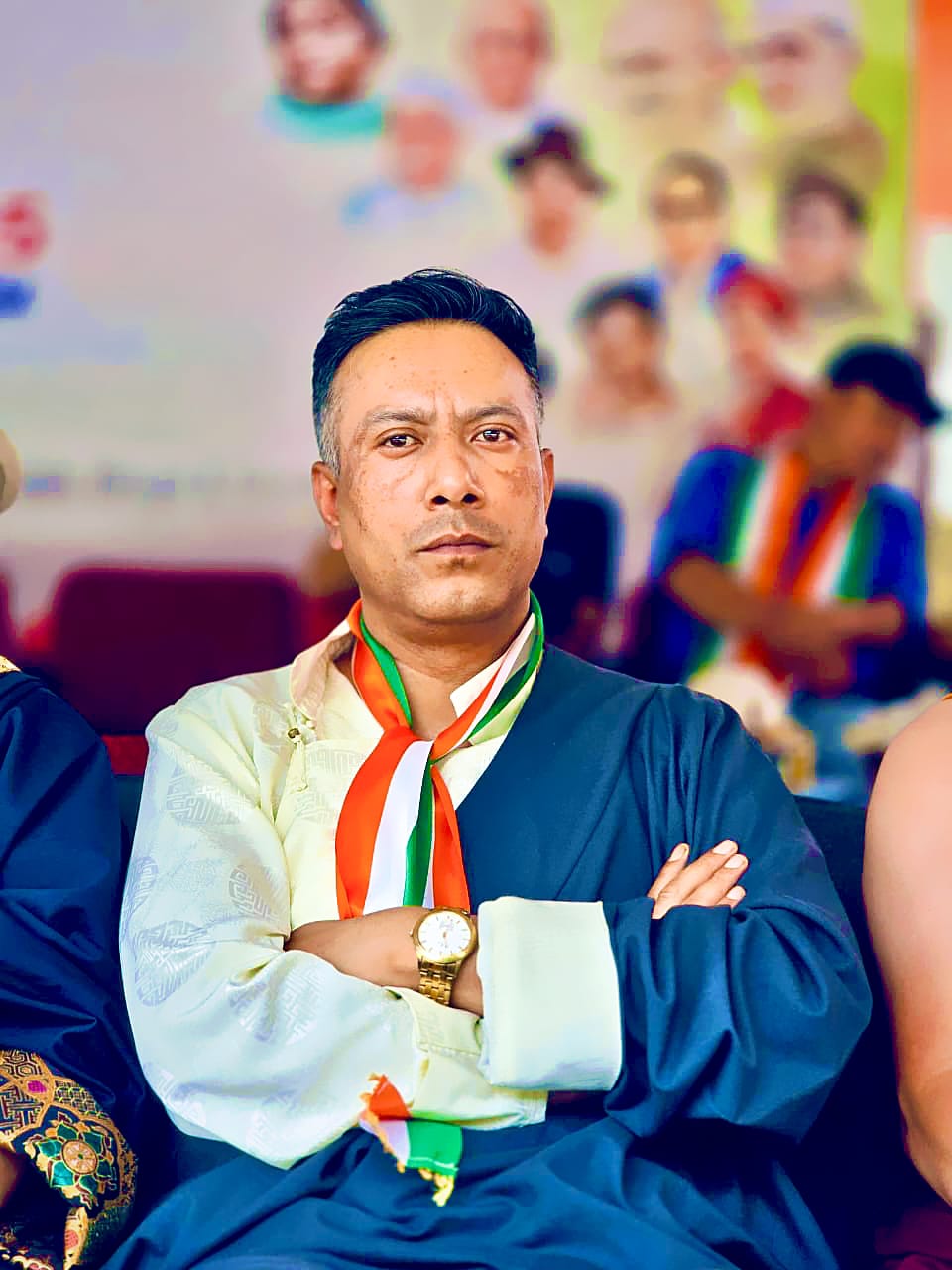
Gangtok:20th Nov:The political discourse in Sikkim has recently become centred on the demand for implementing the Special Intensive Revision (SIR) of the electoral rolls. While the state unit of the Bharatiya Janata Party has been actively pushing for SIR—and appears to be in undue haste—this issue must be handled with the utmost caution, given Sikkim’s unique constitutional and demographic sensitivities,’ according to Passang G Sherpa .
A crucial concern arises from the Election Commission of India’s (ECI) position on Assam. The ECI has omitted Assam from the second phase of SIR, stating that a separate order will be issued for the state owing to the special provisions applicable there under the Citizenship Act. Since Sikkim also enjoys similar constitutional protections, it is logical and necessary that any decision regarding SIR in Sikkim be approached with equal care, through a separate and context-specific process.
Further, the proposal to use 2002 as the base year for SIR is deeply contentious and unacceptable for Sikkim. Any attempt to indirectly recognise 2002 as a cut-off year poses a serious threat to the state’s historical rights, demographic stability, and constitutional safeguards.
These concerns are further compounded by long-standing unresolved issues:
The Sikkimese Nepali community has been waiting 45 years for its rightful reserved seat in the State Legislative Assembly.
The Limboo-Tamang communities have waited 22 years since being granted Scheduled Tribe status, yet their assembly seat reservation remains unfulfilled.
In such a sensitive context, implementing SIR—especially with 2002 as the benchmark—risks further eroding the political rights of these communities. It may open opportunities for anti-Sikkimese Nepali and anti-Limboo-Tamang elements to distort demographic narratives, weaken legitimate constitutional claims, or destabilise the state’s delicate social fabric.
Therefore, making loud, premature, or unconditional demands for SIR in Sikkim without a comprehensive understanding of its implications is likely to result in a serious political miscalculation. All political parties, community organisations, civil society groups, and constitutional experts must be taken into full confidence before any such exercise is undertaken.
Any step regarding SIR must protect Sikkim’s constitutional identity, its historical rights, and the long-standing aspirations of the Sikkimese Nepali and Limboo-Tamang communities. Anything short of this would be an injustice to Sikkim’s past, present, and future.
About the Author
